
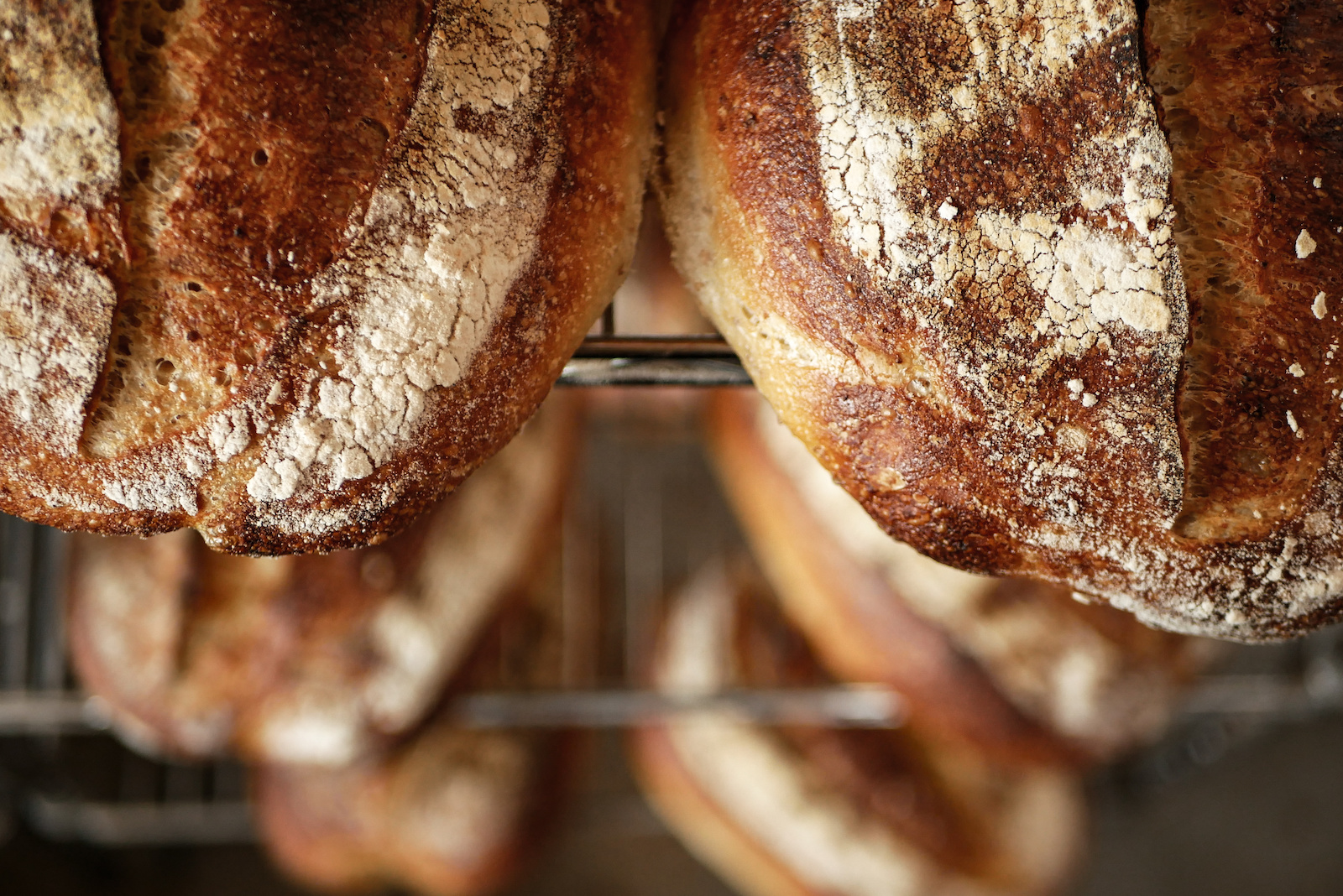
Lighter, tastier and better for your gut.
Sourdough is a unique slow food that is the oldest form of leavened bread and was used as early as ancient Egypt. It makes use of the naturally present microbes (wild yeasts and bacteria) in flour and the atmosphere to produce a bread that is lighter, tastier and better for your gut.
The magic of sourdough happens throughout the dough making process, because once the bread is baked all the microbes (wild yeast and good bacteria) die off in the oven. The longer the fermentation the better the product is for your gut, because that gives the microbes time to process and break down the elements in the dough, namely the starch and form acids, and CO2.
Is sourdough gluten free?
No, sourdough is not gluten free, it will have a lower gluten load compared to commercial bread because of the fermentation process of the microbes (wild yeast and good bacteria) which process the starch in the flour, breaking it down to a more useable form for your body.
You can make sourdough gluten free, by using gluten free flour and a gluten free starter.
Do you make any gluten free products?
Not at this time, we need a separate system and separate equipment to produce guaranteed gluten free bread, as the chances of cross contamination in a gluten bakery are high.
Is sourdough healthier than other bread?
Yes, Sourdough makes use of a much longer fermentation than commercial bread. Regular yeast breads have a first proof of about 1 to 2 hours, and a second proof of about 1 hour, in commercial baking they also make use of a prover which keeps the dough at an optimal temperature for yeast to grow, this cuts down on the proving time so that dough can be baked faster.
At Bread + Milk our sourdough bread is first proved over 2 to 3 hours, and then bulk fermented (second proved) up to 8 hours, it is then cold fermented overnight for an additional 12 hours. This makes the fermentation time almost 10 x longer than commercial bread.
The longer the fermentation the better the bread is for your gut, because that gives the microbes (wild yeast and bacteria in sourdough starter) time to process and break down the elements in the dough, namely the starch.
Once orders are placed the sourdough process begins.
Sourdough is a living product, so in order to get consistent good results it needs a rigid system of feeding, weighing and nurturing before the dough process begins.
The dough making process involves a combination of complex techniques, lengthy procedures and a long and thoroughly planned system to make sure the Sourdough breads maintain a level of consistency.
Sourdough is also affected by weather changes so the process needs to be adapted from season to season.
Also we only bake 3 days a week so with limited time and many different techniques of dough making, forward planning is necessary.
Are all your products authentic sourdough?
No, an authentic sourdough is made from 3 ingredients:
Flour + water + salt + starter (the starter/sourdough yeast culture/levain is made from flour and water).
Authentic sourdough:
Authentic sourdough dough (Flour + water + salt + starter)
- White sourdough loaf
- Wholewheat sourdough loaf
Sourdough with enrichment:
Sourdough dough + enrichers (milk powder, olive oil and/or honey)
- Focaccia (milk powder)
- Ciabatta (milk powder)
- Pizza bases (olive oil)
- Pitas (olive oil)
- Rye (honey)
- Soft white sourdough (milk powder, oil)
- Soft wholewheat sourdough (milk powder, oil)
Sourdough enriched dough/batter:
Sourdough dough with milk/water + enrichers (milk, butter and/or oil, milk powder, egg, sugar)
- Sticky buns, Babka (cake flour, milk, butter, milk powder, eggs, sugar)
Waffles (cake flour, milk, butter, eggs, sugar)
Sourdough hybrid dough
Sourdough dough with milk/water + yeast + enrichers (milk, butter and/or oil, milk powder, egg, sugar)
- Bagels (milk, yeast, starter, honey)
- Challah (milk powder, butter, eggs, sugar, yeast, starter)
Sourdough leavened dough
Adding sourdough as a leavening agent and for flavour but not necessarily giving it a long fermentation.
- Scones
Explain long fermentation, medium fermentation and short fermentation.
The longer the fermentation the better the bread for you, as seen under the Question “Is sourdough healthier than other bread”. But not all doughs will use a long fermentation because adding sugar, honey and milk will give extra food for the yeast and it will multiply faster.
Alternatively adding oil or butter retards the yeast slightly so this will affect fermentation times.
The following doughs fall under these categories:
Long fermentation:
First prove (2 – 4 hours) Bulk fermentation (4 – 8 hours) and cold fermentation (overnight – 12 hours).
- White sourdough
- Wholewheat sourdough
- Soft white sourdough
- Soft wholewheat sourdough
- 100% Rye
- 70% Rye
- 50% Rye
- Focaccia
- Ciabatta
- Pitas
- Sticky buns, Babka
Medium fermentation:
First prove (2 – 4 hours) with bulk fermentation and cold fermentation combined (overnight – 12 hours)
- Pizza bases
- Bagels
- Challah
- Waffles
Short fermentation:
Little to no fermentation (using sourdough as a leavener and for flavour)
- Scones